
How Thinking Fast and Slow Can Transform Your Website Copywriting
Introduction: Why a Psychology Book Still Shapes Modern Marketing
If you work in marketing or you’re a founder, you’ve probably heard people reference Daniel Kahneman’s Thinking Fast and Slow. It’s one of those books that quietly shapes how great marketers think, write, and persuade. What makes it so powerful is simple. It explains how people actually make decisions, not how we like to imagine they do.
When you understand the two systems behind human thinking, your website copy stops being a collection of words and turns into a guided path. It nudges, reassures, clarifies, and motivates.
In this post, we’ll walk through the core ideas from Thinking Fast and Slow and turn them into practical tools you can use to write high performing website copy.
System 1 and 2: Why Visitors Decide Faster Than Thought
Kahneman describes two modes of thinking. System 1 is fast, automatic, and emotional. System 2 is slower and more analytical. Since System 2 takes effort, people avoid using it unless they must.
Visitors land on your website and scan it before they ever read deeply. They form quick judgments about whether they’re in the right place. Most of these impressions form in seconds.
To meet them where they are:
Make your message clear at a glance. Visitors won’t work to understand what you offer.
Use simple, direct wording that feels effortless to read.
Create a visual layout that guides the eye and signals what matters.
If your page helps them feel they’re in the right place, System 1 relaxes and System 2 becomes open to supporting the decision.
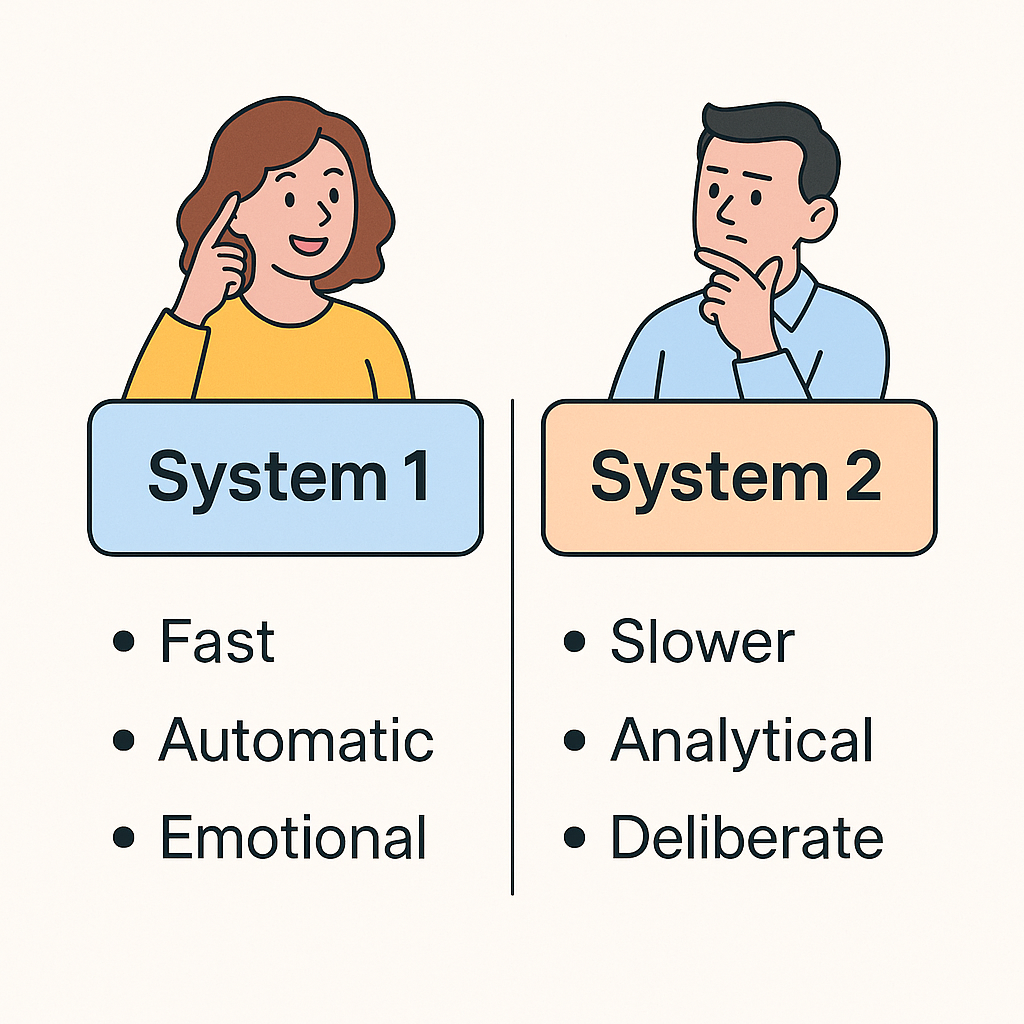
Write for the correct system of thinking.
Cognitive Ease: Why Simplicity Always Converts
Cognitive ease is the brain’s preference for things that feel smooth and simple. When something is easy to process, people assume it’s trustworthy and worth pursuing. When it feels difficult, they hesitate.
Visitors aren’t evaluating your copy with a checklist. They’re sensing whether it feels easy to move through. Your job is to make that answer yes.
You can create that feeling through:
Short sentences that keep readers moving.
Familiar words instead of clever phrasing that forces interpretation.
Clear structure and plenty of whitespace to create visual breathing room.
Subtle reinforcement of key ideas so they land without effort.
Simple doesn’t mean shallow. It means removing friction so your message can do its work.
Framing: How Positioning Helps Shape Perception
People don’t react only to facts. They react to the context around those facts. Framing shapes the meaning of a message before logic even enters the picture.
In website copy, framing helps visitors immediately understand why something matters to them.
For example:
Instead of “Our product reduces downtime,” try “Keep your team productive all day.”
Instead of “We’ve served 300 clients,” try “Join 300 businesses already growing with us.”
Both versions share the same data, but the second set speaks to the outcome the visitor cares about. A strong frame guides interpretation, which makes your message feel more relevant and valuable.
Anchoring: The Quiet Power of First Impressions
Anchoring is the tendency to rely on the first number or idea we see. It becomes the reference point for everything that follows.
On a website, that first anchor influences how visitors perceive your pricing and value. They’re not calculating exact ratios. They’re comparing whatever they saw first to whatever comes next.
Use anchoring to your advantage:
Lead with your highest tier so standard options feel more attainable.
Set context with typical ROI so your price sits beside a meaningful gain.
Share industry norms to shape how your offer is judged.
Strong anchors create expectations that make the rest of your content more persuasive.
Social Proof: Why People Trust What Others Choose
System 1 loves shortcuts, and one of the easiest is looking at what others have already validated. This is why social proof is more than decoration. It lowers perceived risk and increases confidence.
The strongest social proof is specific and relatable:
Use clear outcomes instead of vague compliments.
Show real people with names, roles, and photos whenever possible.
Highlight results that match the visitor’s needs.
When people see themselves in the success of others, your solution feels safer and more credible.
Loss Aversion: Why Fear of Missing Out Drives Action
People feel the pain of loss more strongly than the pleasure of gain. This is why they hesitate to switch tools, change habits, or try something new. The cost of staying put often feels invisible.
Your copy can make that cost visible without resorting to fear tactics. Ethical loss aversion shows visitors what they stand to lose by maintaining the status quo.
Examples include:
“Stop losing leads to slow response times.”
“Don’t let outdated software hold your team back.”
“Avoid common mistakes that cost businesses thousands each year.”
You’re not scaring readers. You’re helping them see the stakes clearly so they can make a confident decision.
A Simple Framework for High Performing Copy
Once you understand how people think, writing persuasive copy becomes more straightforward. Use this process when crafting or refining website messaging.
Start with clarity.
Write your core message so a fifth grader can understand it. Visitors decide quickly, so clarity is your first win.
Guide quick judgments.
Strong headings, scannable layouts, and clear promises help visitors feel oriented right away.
Support with smart anchors.
Introduce helpful numbers and comparisons early so expectations form in your favor.
Frame benefits around real outcomes.
Explain why your offer matters, not just what it includes.
Reassure with proof.
Testimonials, case studies, and specific results reduce uncertainty.
Reduce perceived risk.
Guarantees, clear support, and expected results help visitors feel safe moving forward.
Remove friction.
If any sentence or feature forces readers to pause, simplify it. Ease invites action.
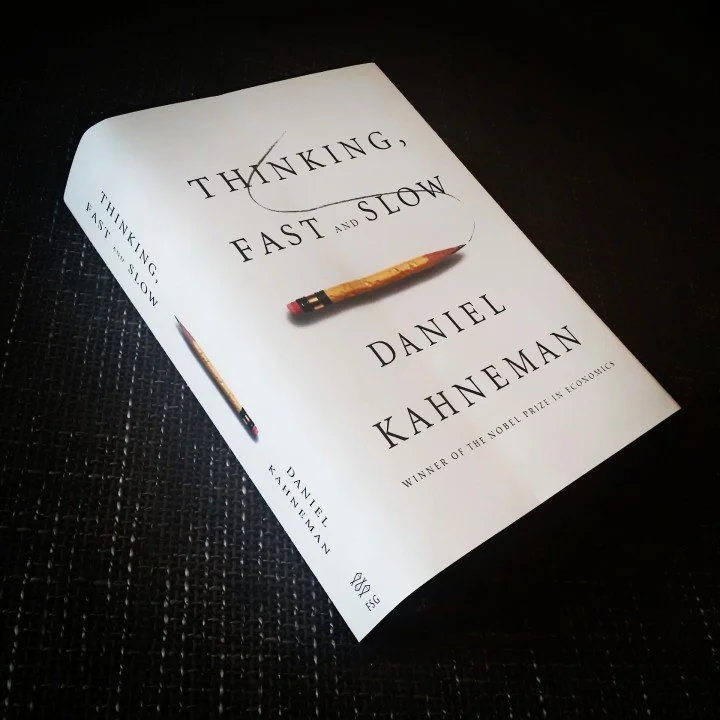
Thinking Fast and Slow is an essential read for understanding the psychology of your audience.
Conclusion: Write for How People Actually Think
Thinking Fast and Slow isn’t a marketing book, yet it shapes some of the best marketing in the world. When you write for both the fast and slow parts of the brain, your copy feels intuitive, trustworthy, and compelling.
Your visitors start saying yes before they fully realize they’ve made a decision. That’s when your website stops acting like a brochure and starts performing like a conversion engine.
If you're looking for website copy that makes people say yes on autopilot, reach out to me on wayne@everyonecreative.co I’d love to help you write your website, and turn it into the easiest decision your visitors make all day.
